Hydrated Calcium Silicate USP NF FCC Food Grade Manufacturers Exporters |
| Aadhunik Industries is a manufacturing group company. Aadhunik Industries is pioneer manufacturer and exporter of Hydrated Calcium Silicate USP NF FCC Food Grade, Specialty Chemicals, Pharmaceutical Excipients, Food Fragrance & Flavor chemicals in India. It has toll manufacturers and representatives in UAE, Europe, Canada & USA and agents & customers in all countries like USA, Canada, Europe, UAE, South Africa, Tanzania, Kenya, Egypt, Nigeria, Uganda, Turkey, Mexico, Brazil, Chile, Argentina, Dubai, Netherlands, Italy, Spain, Germany, Portugal, France, Malaysia, Indonesia, Thailand, Korea, Japan, Russia etc. |
| Aadhunik Industries and/or associated units are FDA-GMP certified, Halal and/or Kosher certified, REACH registered, ISO-9001, ISO-22000 HACCP certified. We offer crystals granules in precise micron or mesh size as per buyers needs. We offer very high purity standards as per specifications required. |
 ----------
  ----------
  Translate


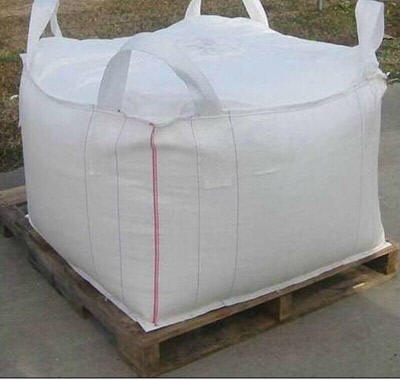


SDS MSDS of Calcium Silicate Manufacturers
Specifications of Hydrated Calcium Silicate USP NF Grade Show/Hide Details
Specifications of Calcium Silicate USP NF Grade:
DEFINITION
Calcium Silicate, crystalline or amorphous, is a compound of calcium oxide and silicon dioxide. It contains NLT 4.0% of calcium oxide and NLT 35.0% of silicon dioxide.
IDENTIFICATION
A.
Identification Tests - General, Calcium:
Sample solution: Mix 0.5 g with 10 mL of 3 N hydrochloric acid. Filter, and neutralize the filtrate to litmus paper with 6 N ammonium hydroxide.
Acceptance criteria: The neutralized filtrate meets the requirements.
B.
Analysis: Prepare a bead by fusing a few crystals of sodium ammonium phosphate on a platinum loop in the flame of a gas burner. Place the hot, transparent bead in contact with the specimen of Calcium Silicate, and again fuse.
Acceptance criteria: Silica floats about in the bead, producing, upon cooling, an opaque bead having a web-like structure.
ASSAY
Silicon Dioxide: To pass the test.
Acceptance criteria: NLT 35.0% of silicon dioxide (SiO2) and 90.0%–110.0% of the content stated in the labeling, or within the range of percentages stated in the labeling
Calcium Oxide: To pass the test.
Acceptance criteria: NLT 4.0% of calcium oxide (CaO) and 90.0%–110.0% of the content stated in the labeling, or within the range of percentages stated in the labeling
Loss on Ignition: Transfer 1 g to a suitable tared crucible, dry at 105C for 2 h, and ignite at 900C to constant weight: it loses NMT 20.0% of its weight.
Limit of Lead: To pass the test.
Acceptance criteria: NMT 10 ppm
Limit of Fluoride:
Acceptance criteria: NMT 50 ppm
pH: 8.4–11.2, determined in a well-mixed aqueous suspension (1 in 20)
Ratio of Silicon Dioxide to Calcium Oxide: Divide the percentage of silicon dioxide obtained in the test for Silicon Dioxide by the percentage of calcium oxide obtained in the test for ;Calcium Oxide.
Acceptance criteria: 0.5–20
Sum of CaO, SiO2, and Loss on Ignition: The sum of the percentages obtained in the three tests is NLT 90.0%.
Specifications of Hydrated Calcium Silicate FCC Food Grade Show/Hide Details
Specifications of Calcium Silicate FCC Food Grade:
INS: 552 --- CAS: 1344-95-2
DESCRIPTION
Calcium Silicate occurs as a white to off white, free-flowing powder that remains so after absorbing relatively large amounts of water or other liquids. It is a hydrous or anhydrous silicate with varying proportions of CaO and SiO2. It is insoluble in water, but it forms a gel with mineral acids. The pH of a 1:20 aqueous slurry is between 8.4 and 12.5.
Function: Anticaking agent; filter aid.
REQUIREMENTS
Identification:
A. Mix about 500 mg of sample with 10 mL of 2.7 N hydrochloric acid, filter, and neutralize the filtrate to litmus paper with 6 N ammonium hydroxide. The neutralized filtrate gives positive tests for Calcium.
B. Prepare a bead by fusing a few crystals of sodium ammonium phosphate on a platinum loop in the flame of a Bunsen burner. Place the hot, transparent bead in contact with a sample, and again fuse. Silica floats about in the bead, producing, upon cooling, an opaque bead with a web-like structure.
Fluoride: Not more than 10 mg/kg.
Lead: Not more than 5 mg/kg.
The following additional Requirements should conform to the representations of the vendor: Calcium Oxide, Loss on Drying, Loss on Ignition, and Silicon Dioxide.
CAS Number 1344-95-2 or 1344-96-3 or 10101-39-0, Hydrated Calcium Silicate USP NF FCC Food Grade manufacturers suppliers exporters at:
manufacturer supplier exporter
Aadhunik Industries
Ankleshwar Gujarat & Mumbai, India
TEL: (OFFICE) 91-22-65290104, 91-22-65290105.
e-mail: info@aadhunikindustries.com

Copyright and Usual Disclaimer is Applicable. 4-07-2026
Acetic Acid Glacial ------- Ammonium Bicarbonate ------- Aluminum Chloride ------- Aluminium Potassium Sulphate ------- Ammonium Carbonate ------- Ammonium Carbamate ------- Ammonium Chloride ------- Ammonium Persulfate------- Barium Chloride ------- Benzyl Alcohol ------- Benzoic Acid ------- Boric Acid ------- Borax ------- Calcium Chloride ------- Calcium Oxide ------- Calcium Hydroxide ------- Calcium Lactobionate ------- Calcium D Saccharate ------- Calcium Sulfate ------- Carbamide Peroxide ------- Chromic Chloride -------Copper Cupric Chloride ------- Copper Sulphate ------- Precipitated Coated & Directly Compressible Calcium Carbonate ------- Fumaric Acid ------- Ferric Chloride ------- Formaldehyde Solution ------- Lithium Carbonate ------- Magnesium Chloride ------- Magnesium Sulphate ------- Maleic Acid ------- Malic Acid ------- Manganese Chloride ------- Manganese Sulphate ------- Octyl Dodecanol ------- Oleic Acid ------- Phenyl Ethanol ------- Potassium Bromide ------- Potassium Chloride ------- Potassium Hydroxide Pellets ------- Potassium Monopersulfate ------- Potassium Phosphate Monobasic Dibasic Tribasic ------- Propylene Carbonate ------- Selenious Acid ------- Sodium Acetate ------- Sodium Diacetate ------- Sodium Hydroxide Pellets------- Sodium Thiosulfate ------- Sodium Formaldehyde Bisulfite ------- Sodium Perborate ------- Vanadyl Sulfate ------- Zinc Chloride